

How do cryogenic ribbon cables perform in cold helium environments?
In the realm of scientific research and advanced engineering, cryogenic environments play a crucial role. Cold helium, with its extremely low temperatures, is commonly used in applications such as particle accelerators, superconducting magnets, and cryogenic storage systems. As a leading supplier of Cryogenic Ribbon Cable, I have witnessed firsthand the importance of understanding how these cables perform in cold helium settings.
Physical Properties in Cold Helium
When cryogenic ribbon cables are exposed to cold helium environments, their physical properties undergo significant changes. One of the most notable effects is the contraction of materials. As the temperature drops, the cable's insulation and conductors shrink, which can potentially lead to mechanical stress. However, our cryogenic ribbon cables are engineered with materials that can withstand these temperature-induced contractions. The insulation materials, carefully selected for their low-temperature tolerance, maintain their flexibility and integrity even at the ultra-cold temperatures of helium.
The conductors in our cryogenic ribbon cables are also designed to perform optimally in cold helium. Copper and other metals used as conductors experience a decrease in electrical resistance as the temperature drops. This phenomenon, known as superconductivity in certain materials at very low temperatures, can be leveraged to enhance the cable's performance. Our cables are constructed with high-purity conductors that take advantage of this reduced resistance, resulting in lower power losses and improved signal transmission.
Electrical Performance
The electrical performance of cryogenic ribbon cables in cold helium environments is a critical factor in their suitability for various applications. In addition to the reduced resistance mentioned earlier, the dielectric properties of the insulation materials also change at low temperatures. The permittivity and dielectric constant of the insulation can be affected, which in turn impacts the cable's capacitance and impedance characteristics.
Our cryogenic ribbon cables are carefully engineered to maintain stable electrical performance in cold helium. Through precise material selection and manufacturing processes, we ensure that the capacitance and impedance remain within the specified tolerances even at extremely low temperatures. This stability is essential for applications where accurate signal transmission is required, such as in high-energy physics experiments and cryogenic sensors.
Flexibility and Durability
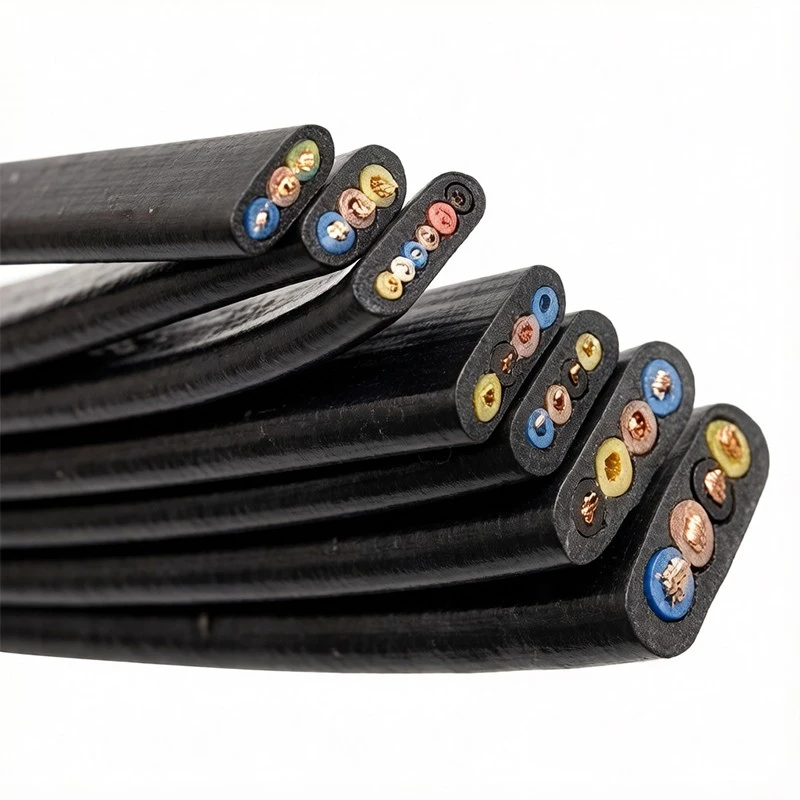
Flexibility and durability are key considerations when choosing cryogenic ribbon cables for cold helium environments. These cables often need to be routed through complex systems and may be subject to repeated bending and flexing. In cold helium, the flexibility of the cables can be compromised due to the brittleness of some materials at low temperatures.
However, our Cryogenic Ribbon Cable is designed to maintain excellent flexibility even in the coldest helium environments. We use special insulation materials that have a high degree of flexibility at low temperatures, allowing the cables to be easily installed and routed. Additionally, our cables are constructed with a robust design that can withstand the mechanical stresses associated with repeated bending and flexing, ensuring long-term durability.
Comparison with Other Types of Ribbon Cables
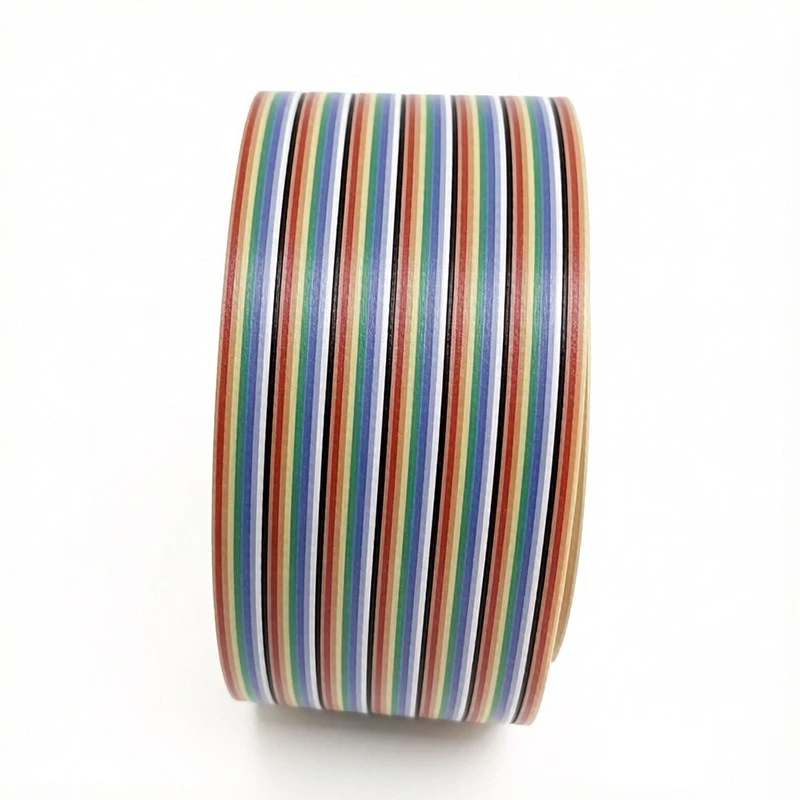
It's important to compare the performance of cryogenic ribbon cables with other types of ribbon cables in cold helium environments. For example, Silicone Ribbon Cable and High Temperature Ribbon Cable are designed for different temperature ranges and may not perform as well in cold helium.
Silicone ribbon cables are known for their flexibility and heat resistance, but their performance can degrade at extremely low temperatures. The silicone insulation may become brittle and crack, leading to electrical failures. High temperature ribbon cables, on the other hand, are optimized for high-temperature applications and may not have the necessary low-temperature properties to perform in cold helium.
In contrast, our cryogenic ribbon cables are specifically designed for use in ultra-cold environments. They offer superior performance in terms of electrical stability, flexibility, and durability compared to other types of ribbon cables.
Applications in Cold Helium Environments
Cryogenic ribbon cables have a wide range of applications in cold helium environments. In particle accelerators, these cables are used to connect various components, such as superconducting magnets and sensors, ensuring reliable electrical connections in the ultra-cold environment. In cryogenic storage systems, the cables are used to transfer data and power between different parts of the system.
Another important application is in cryogenic sensors. These sensors are used to measure various physical properties, such as temperature, pressure, and magnetic fields, in cold helium environments. Our cryogenic ribbon cables are ideal for these applications due to their stable electrical performance and ability to withstand the low temperatures.
Quality Assurance and Testing
As a supplier of cryogenic ribbon cables, we are committed to providing high-quality products that meet the strict requirements of our customers. We have a comprehensive quality assurance program in place that includes rigorous testing of our cables in cold helium environments.
Our testing facilities are equipped with state-of-the-art equipment that can simulate the extremely low temperatures and other conditions found in cold helium applications. We test the electrical performance, mechanical properties, and durability of our cables to ensure that they meet or exceed the industry standards.
Conclusion
In conclusion, cryogenic ribbon cables offer excellent performance in cold helium environments. Their unique physical and electrical properties make them ideal for a wide range of applications in scientific research and advanced engineering. As a leading supplier of Cryogenic Ribbon Cable, we are dedicated to providing high-quality products that meet the needs of our customers. If you are looking for reliable cryogenic ribbon cables for your cold helium applications, we invite you to contact us for more information and to discuss your specific requirements. We look forward to the opportunity to work with you and to provide you with the best solutions for your needs.
References
- "Cryogenic Engineering Handbook", Second Edition, Springer
- "Handbook of Electrical and Electronic Insulating Materials", CRC Press
- "Fundamentals of Cryogenics", McGraw-Hill Education