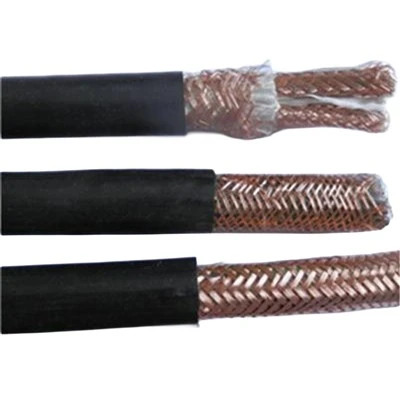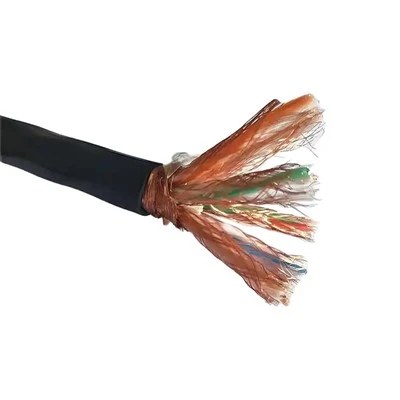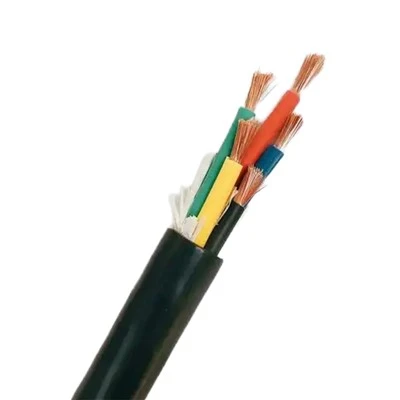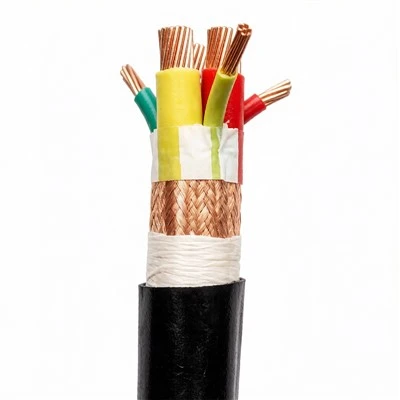

Flat cables, as a type of multi-core cable, were first used in computers and electronic instruments. Due to their advantages such as flexibility and small wiring space, they are also widely used in consumer electronics such as telephones and tape recorders. To meet different usage requirements, new types of flat cables are constantly being developed. The application of insulation shift connectors makes the termination of flat cables extremely convenient and reliable, but it also places higher demands on the geometric dimensions of flat cables, such as the center-to-center distance tolerance, cumulative center-to-center distance error, and insulation thickness, thus increasing the difficulty of manufacturing flat cables.
The production process of flat cables is basically similar to that of plastic wiring. In the flat cable forming unit, in addition to adding a flat cable forming device related to the main process of insulation material processing, the equipment such as the multi-head pay-off frame, cooling water tank, spark detector, puller, and coiling machine are basically similar to the equipment used in the production of plastic wiring.
The forming method of flat cables involves sandwiching a group of core wires evenly arranged at a certain spacing between two pieces of plastic film, and then bonding the three together to form a flat cable using a certain method. Two problems need to be solved during the molding process: first, how to produce two layers of plastic film that can bond or fuse together; and second, how to ensure that a group of conductors maintains a certain spacing and is evenly arranged.
The insulation of flat cables includes soft polyvinyl chloride, polyester, and fluoroplastics, etc. These polymer compounds have different processing properties, requiring different processing methods to shape them. Various flat cable molding machines have been developed. Although each company's molding method has its own characteristics, they can be basically divided into four categories:
1. Direct extrusion method. This method uses a plastic extruder to directly extrude flat cables using a die, such as the flat cable machines from KABLEMETAL (West Germany) and MAILFLER (Switzerland).
2. Lamination method. This method uses a pair of rollers to press the conductors and plastic together to form a cable. This method can be further divided into two types based on the source of the plastic film: one is called extrusion film lamination, such as the flat cable machine from Showa Wire & Cable Co., Ltd. (Japan); the other is called pre-formed film lamination, such as the ribbon cable machine from the 23rd Research Institute of the Ministry of Machinery and Electronics Industry.
3. Bonding method. Two thin films are bonded to a conductor using an adhesive to form a flat cable, as seen in the Polycool flat cable machine from Factory 20.
4. Methods between two forming methods, such as shielded flat cable machines combining extrusion and lamination, have been reported in numerous publications.