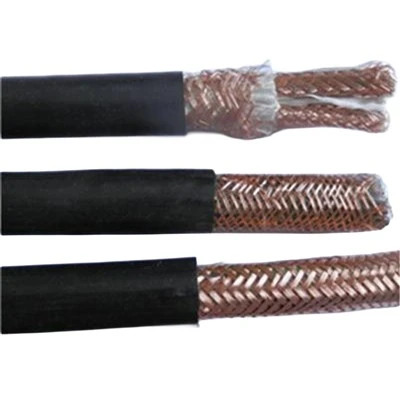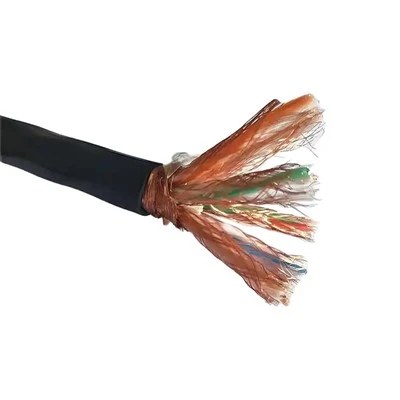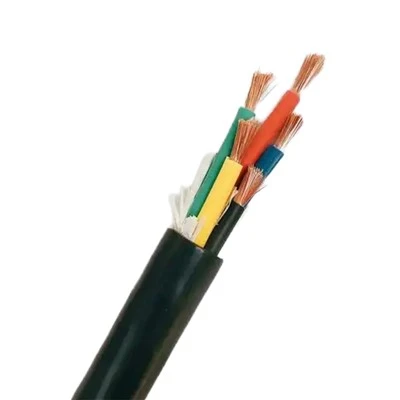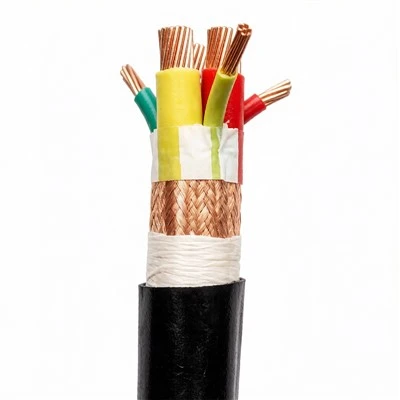

Electrical Performance: Computer cables typically employ a multi-core twisted-pair structure and are equipped with a shielding layer (such as aluminum foil shielding or braided shielding) to reduce electromagnetic interference (EMI) and radio frequency interference (RFI), ensuring stable data transmission and a low bit error rate. Ordinary cables are usually single-core or unshielded, unable to effectively suppress interference, potentially leading to signal attenuation or data errors.
Transmission Rate: Computer cables support high-frequency signal transmission (e.g., Cat5e, Cat6 network cables can achieve transmission rates exceeding 1Gbps), suitable for computer networks, servers, industrial control equipment, and other similar applications. Ordinary cables (such as power cords or general control cables) are only suitable for low-frequency signal or power transmission and cannot meet the demands of high-speed data communication.
Environmental Adaptability: The shielding layer and insulation materials of computer cables (such as low-smoke halogen-free materials) can withstand complex electromagnetic environments and high-density wiring scenarios, while the performance of ordinary cables degrades significantly in environments with strong electromagnetic interference.
Industry standards: Computer cables must comply with specific standards (such as TIA/EIA-568 for network cables), while the standards for ordinary cables (such as GB/T 5023 for power cables) are different. Using different standards may lead to compliance issues.