

How do flat ribbon power cables handle heat dissipation?
Hey there! I'm a supplier of Flat Ribbon Power Cables, and I often get asked about how these cables deal with heat dissipation. It's a crucial topic, especially when you're using cables for power - intensive applications. So, let's dive right in and explore this together.
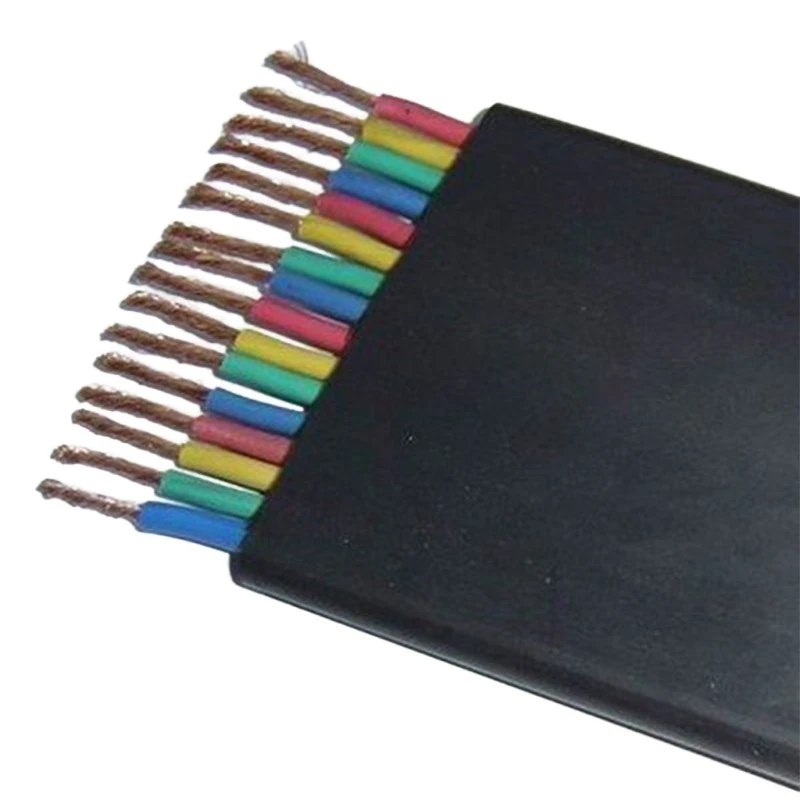
First off, let's understand what flat ribbon power cables are. A Flat Ribbon Power Cable is a type of cable where the conductors are arranged in a flat, parallel configuration. This design gives it a distinct look compared to traditional round cables. The flat shape has several advantages, and heat dissipation is one area where it really shows its worth.
One of the key factors in heat dissipation is the surface area. Flat ribbon cables have a much larger surface area compared to round cables of the same cross - sectional area. You know, heat transfer occurs through conduction, convection, and radiation. With a larger surface area, there's more space for heat to be transferred away from the cable. Conduction is when heat moves through the cable material itself. The flat design allows for a more efficient spread of heat along the length and width of the cable, rather than it being concentrated in the center like in a round cable.
Convection is another important heat - transfer mechanism. Air can flow more freely around a flat ribbon cable. When air moves over the surface of the cable, it takes away heat. The flat shape doesn't impede the air flow as much as a round cable might. Think of it like this: if you have a flat piece of metal and a round rod, and you blow air over them, the flat piece will cool down faster because the air can make better contact with its surface. In a real - world application, this means that flat ribbon power cables are less likely to overheat due to better convective cooling.
Radiation also plays a part. All objects emit heat in the form of infrared radiation. The larger surface area of flat ribbon cables allows them to radiate heat more effectively into the surrounding environment. This is especially useful in enclosed spaces where air flow might be limited.
Now, let's talk about the materials used in flat ribbon power cables. The conductors in these cables are usually made of copper or aluminum. Copper is an excellent conductor of both electricity and heat. When electricity flows through the cable, some of the energy is converted into heat. Copper can quickly transfer this heat away from the source, helping to keep the cable temperature in check.
The insulation material is also important for heat dissipation. High - quality insulation materials are designed not only to insulate the conductors but also to allow heat to pass through. Some insulation materials have good thermal conductivity, which means they can transfer heat from the conductors to the outside environment more efficiently.
In some applications, where the heat generated is particularly high, we offer High Temperature Ribbon Cable. These cables are specifically designed to handle extreme temperatures. They use special insulation and conductor materials that can withstand high heat without degrading. The construction of these cables is also optimized for better heat dissipation. For example, the insulation might have a porous structure that allows air to circulate inside the cable, enhancing convective cooling.
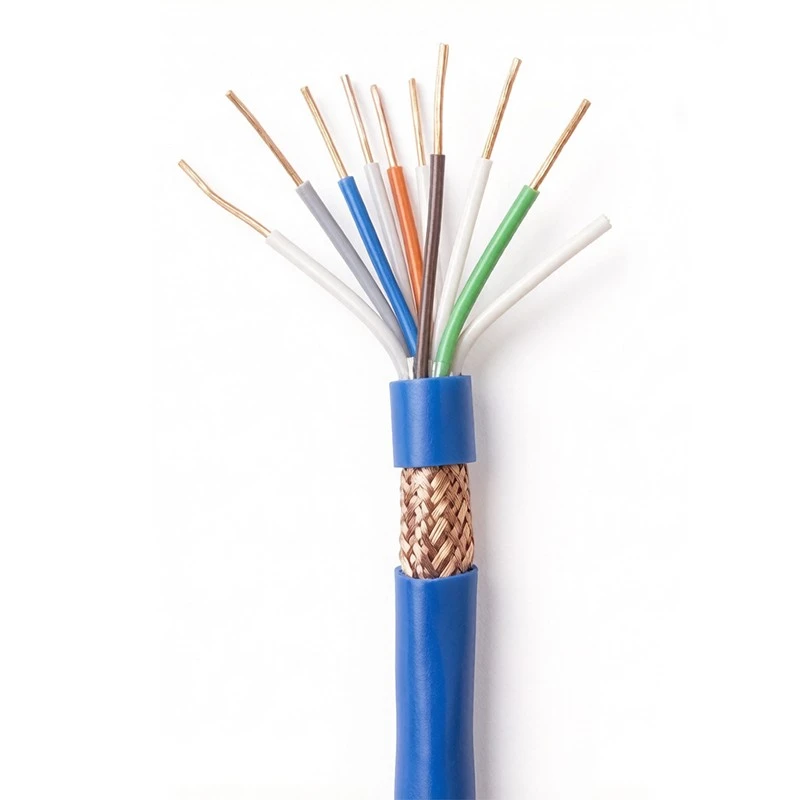
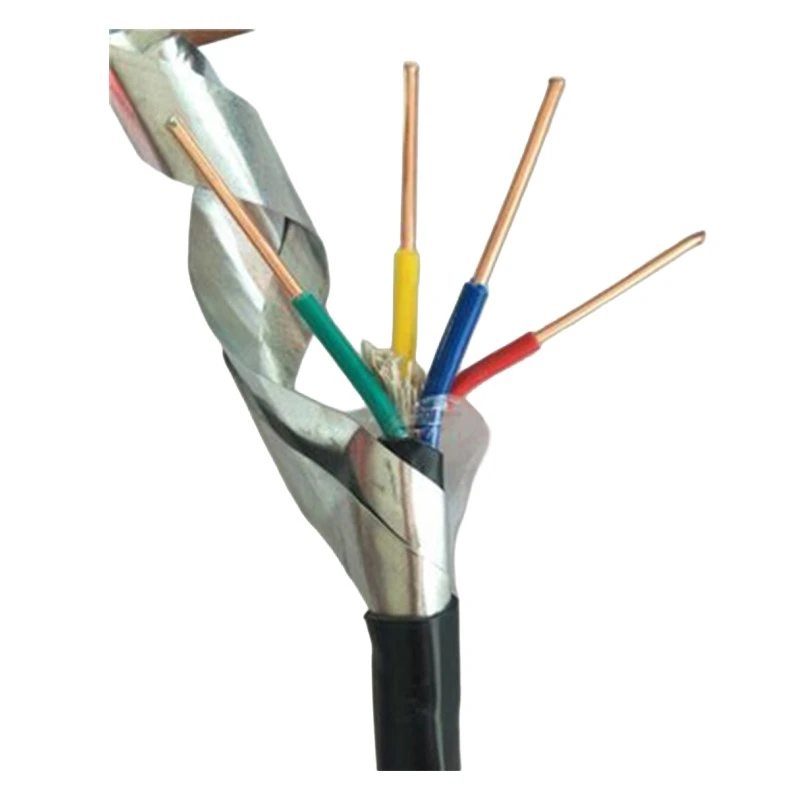
Another type of cable we supply is the Shielded Flat Ribbon Cable. The shielding not only protects the cable from electromagnetic interference but can also contribute to heat dissipation. The shielding material can act as an additional heat sink, absorbing heat from the conductors and radiating it away.
Cryogenic Ribbon Cable is yet another specialty product. In cryogenic applications, the challenge is the opposite - keeping the cable cold. However, the principles of heat transfer still apply. These cables are designed to minimize heat transfer from the outside environment to the cable, which is a different kind of heat management but still related to the overall concept of heat dissipation.
When you're choosing a flat ribbon power cable, it's important to consider the application and the expected heat load. If you're using the cable in a high - power application, like in a data center or an industrial machine, you'll need a cable that can handle the heat. You might want to look at the cable's ampacity, which is the maximum amount of electrical current it can carry without overheating. A cable with a higher ampacity is generally better at dissipating heat.

It's also a good idea to consider the installation environment. If the cable is going to be installed in a confined space with poor air flow, you might need to choose a cable with better heat - dissipation properties. You could also consider adding additional cooling measures, like fans or heat sinks, to help keep the cable temperature down.
In conclusion, flat ribbon power cables are well - equipped to handle heat dissipation thanks to their unique design and the materials used in their construction. Their large surface area allows for efficient heat transfer through conduction, convection, and radiation. And with a range of specialty cables like high - temperature, shielded, and cryogenic cables, we can meet the heat - management needs of various applications.
If you're in the market for Ribbon Power Cable or have any questions about heat dissipation or cable selection, don't hesitate to reach out. We're here to help you find the right cable for your needs. Whether you're a small business or a large industrial operation, we've got the expertise and the products to meet your requirements. Let's start a conversation and see how we can work together to solve your cable needs.
References
- Electrical Engineering Principles and Applications, Allan R. Hambley
- Handbook of Electronic Packaging Thermal Management, Avram Bar - Cohen, et al.